SkillPod
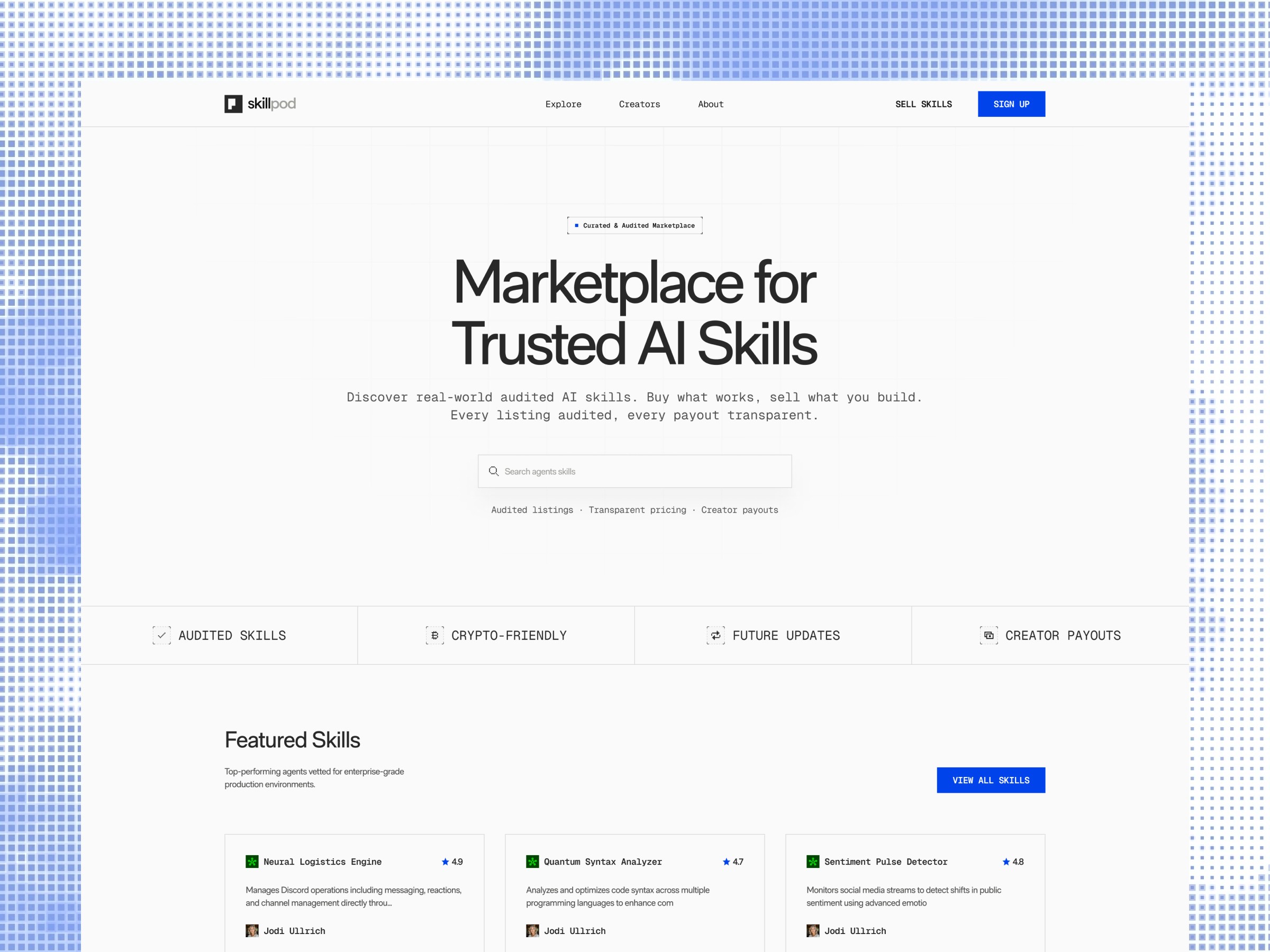
Marketplace for Trusted AI Skills
The gap
AI builders are producing genuinely useful skills and agents — tools that automate workflows, connect to APIs, handle tasks. But there's nowhere good to sell them. GitHub is free. Gumroad wasn't built for software. Building your own storefront is a full project in itself.
Buyers have it worse. Quality is impossible to judge. Provenance is unclear. And if something contains malicious code, there's no accountability — no platform that made a promise, no one to call.
The opportunity wasn't just a marketplace. It was being the first platform to make a credible trust promise in a category where trust had never been designed.
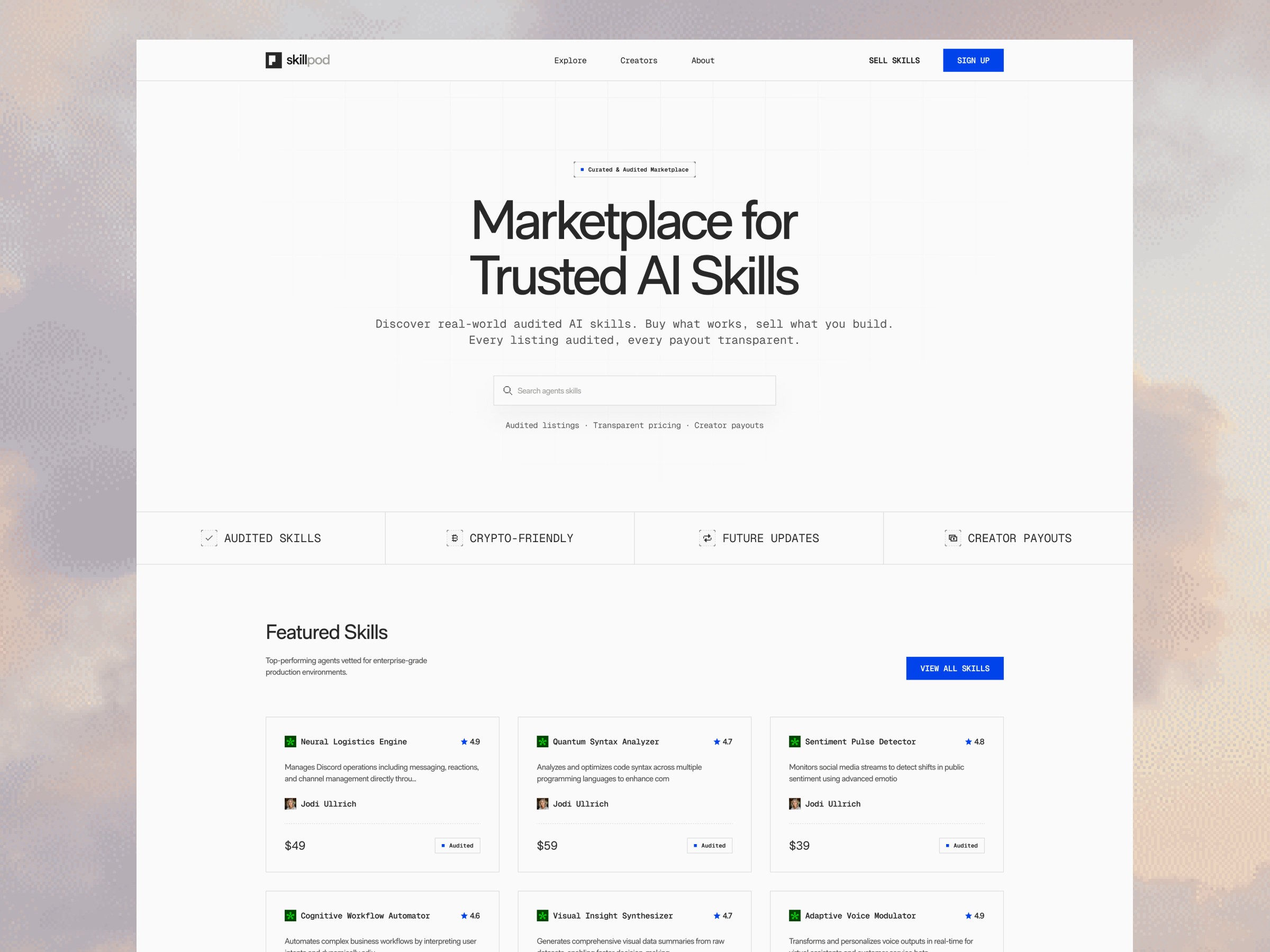
Designing trust from scratch
The hardest thing about designing for a new category: you can't borrow trust. Airbnb has a decade of cultural familiarity. The App Store has Apple's gatekeeping. SkillPod has none of that — yet. So trust couldn't live in one place. It had to be present at every moment where a buyer's doubt could creep in.
I mapped the buyer journey and asked: where does someone hesitate? The answer was three moments — the listing page, the checkout, and the purchase button itself.
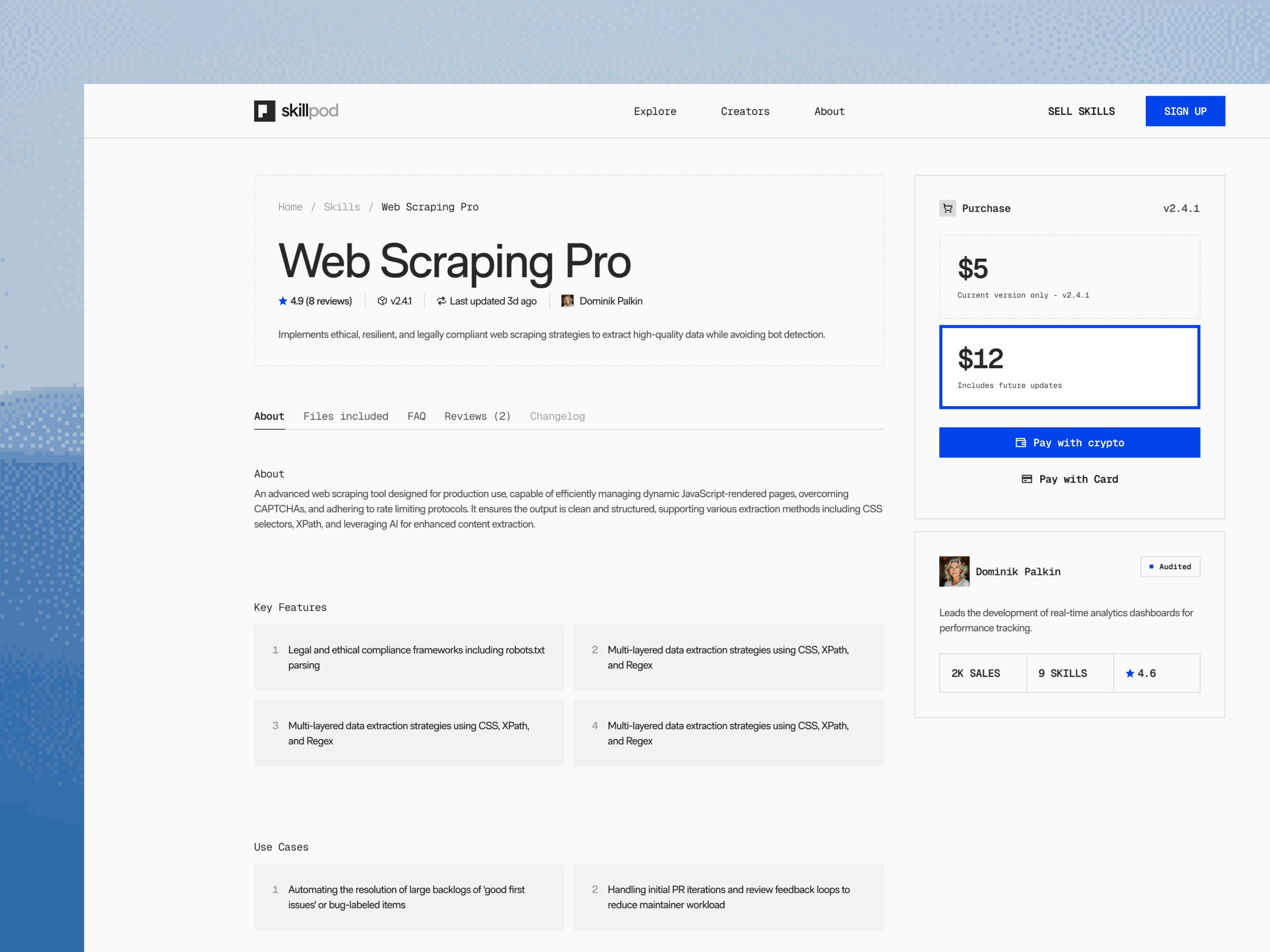
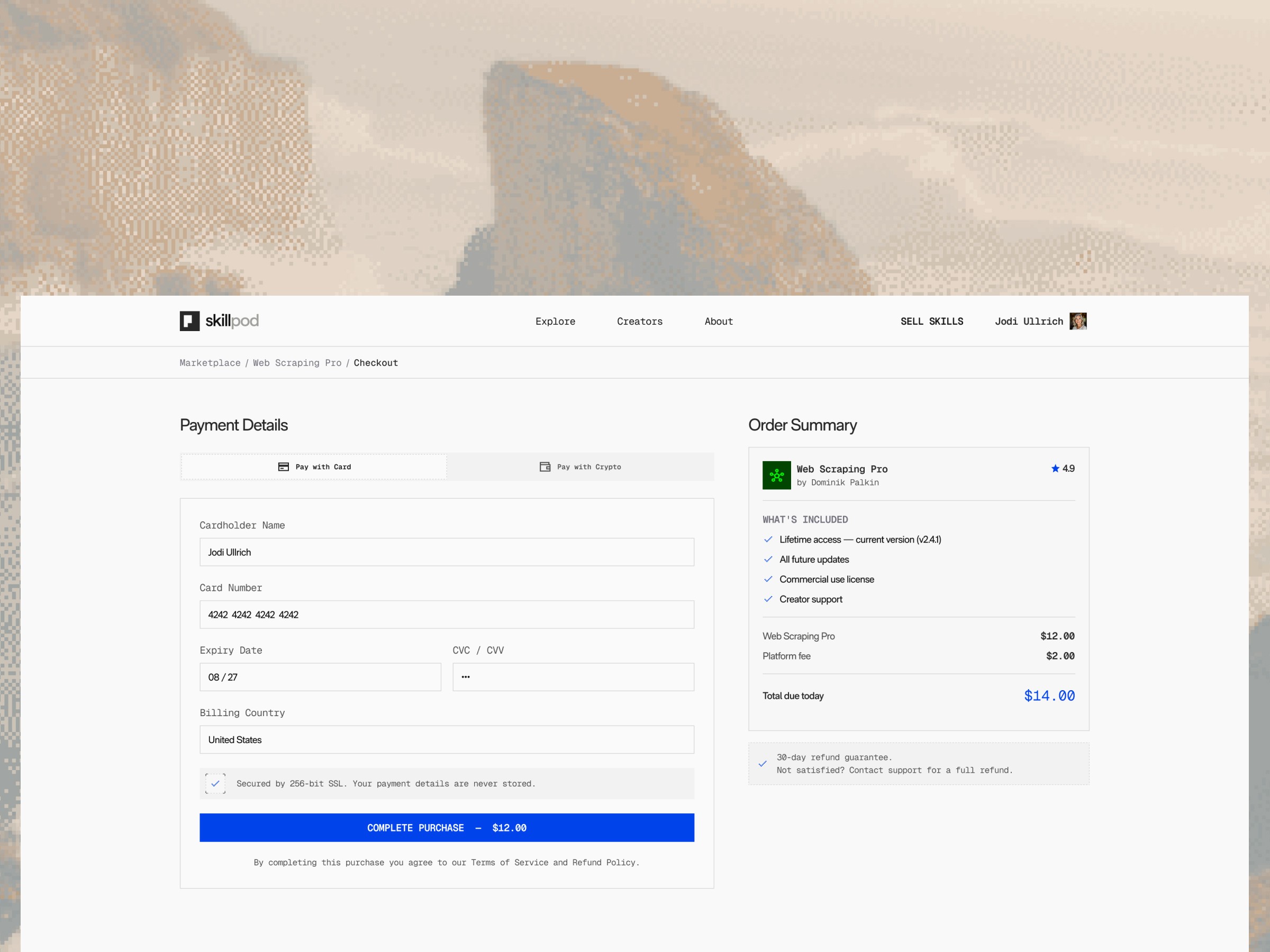
On the listing page, the structure answers three questions in order: what is this, can I trust it, is it worth it — before the buyer sees the price. At checkout, the platform fee is its own line item, the refund guarantee is above the CTA, not in the footer. The button reads "Complete Purchase — $12.00." The price is in the button because ambiguity at the moment of commitment is where you lose people.
One product, two very different users
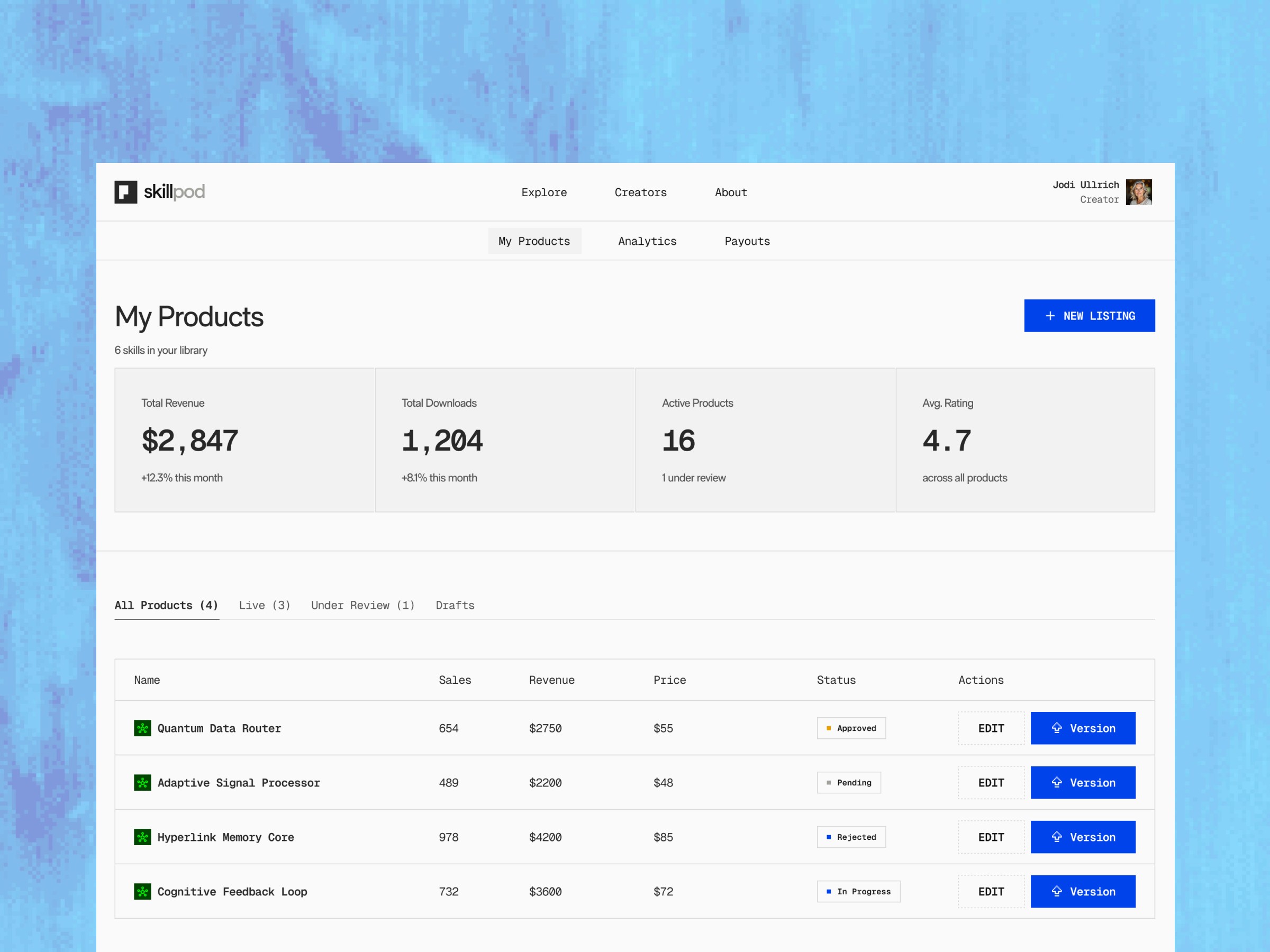
SkillPod has buyers and sellers — and most users will be both. The architectural decision was a mode switch rather than two separate apps. One account, one login, but the UI shifts meaningfully depending on your active role.
In seller mode the nav grows a dashboard, earnings become visible, and listings are manageable. Switch to buyer mode and none of that is in the way. The marketplace is shared; the complexity isn't.
Building two separate products would have doubled the design surface area and fragmented a userbase that was already starting at zero. The mode switch was the only call that made sense at this stage — but it only works if the transition never leaves someone wondering where they are.
Crypto-native without the crypto feeling
Before committing to payment infrastructure, we looked at the data. Google Analytics showed that searches for AI agents and agentic tools are disproportionately coming from Asia — China especially. That market is real, it's growing fast, and for a large portion of those users, crypto isn't a novelty. It's how they pay, because traditional card payments are either unavailable or heavily restricted.
At the same time, most developers in Europe and the US don't have a crypto wallet and don't want to think about one.
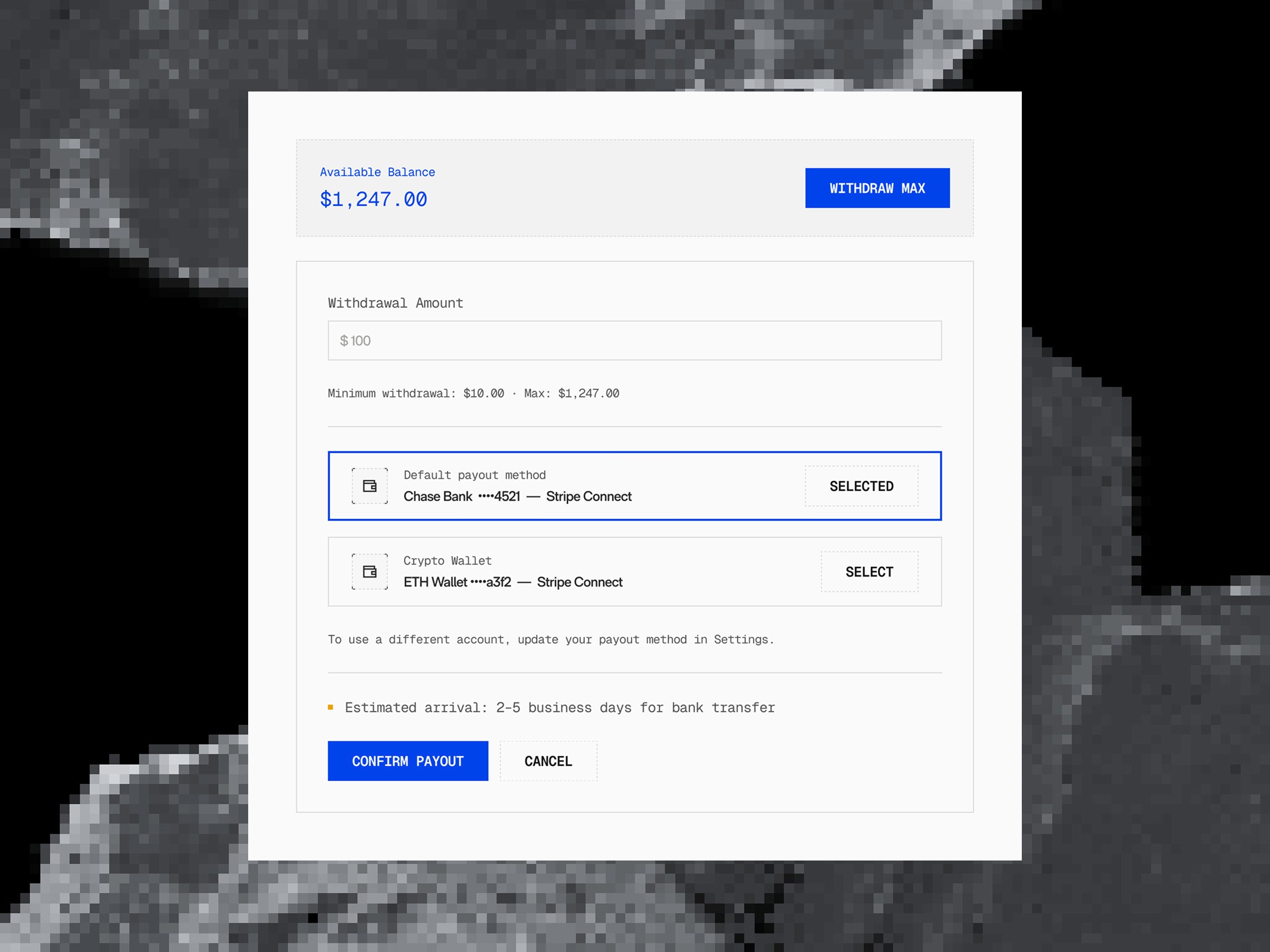
The design decision wasn't crypto-first or crypto-last — it was crypto-equal. Card and crypto sit as two tabs at checkout with no hierarchy between them. Sellers can receive payouts in USDC or via bank transfer. Neither path is the "normal" one and neither is the "alternative." You land on what makes sense for you, and the other option is one tap away.
That sounds simple. The hard part was making sure neither side felt like an afterthought — that a US developer paying by card didn't feel like they'd stumbled into a Web3 product, and that a buyer in Southeast Asia paying with crypto didn't feel like they were using a workaround.
How I worked
AI-assisted design process
Two weeks for a full dual-sided marketplace is fast. The way I made it work: I used Claude Code with MCP throughout the process — not just to move faster, but to think better. I'd use it to stress-test flows, surface edge cases I hadn't considered, and get structured feedback on information hierarchy before moving to polish.
It's not about generating screens. It's about having a thinking partner that doesn't get tired and doesn't pull punches. Several decisions in this case study came out of that back-and-forth, not from me sitting alone with a blank Figma canvas.
This is how I work now. Fast, structured, honest feedback loops — with AI as part of the design process, not a shortcut around it.
What I'm watching after launch
Does the audit promise actually move buyers? The trust infrastructure is designed to be credible — but whether it's the thing that tips a skeptical buyer over the line needs real traffic to answer.
Does the mode switch feel natural in practice? First-time users will tell a different story, and that's the version that matters.