Sidezy
Short-term jobs platform
Project overview
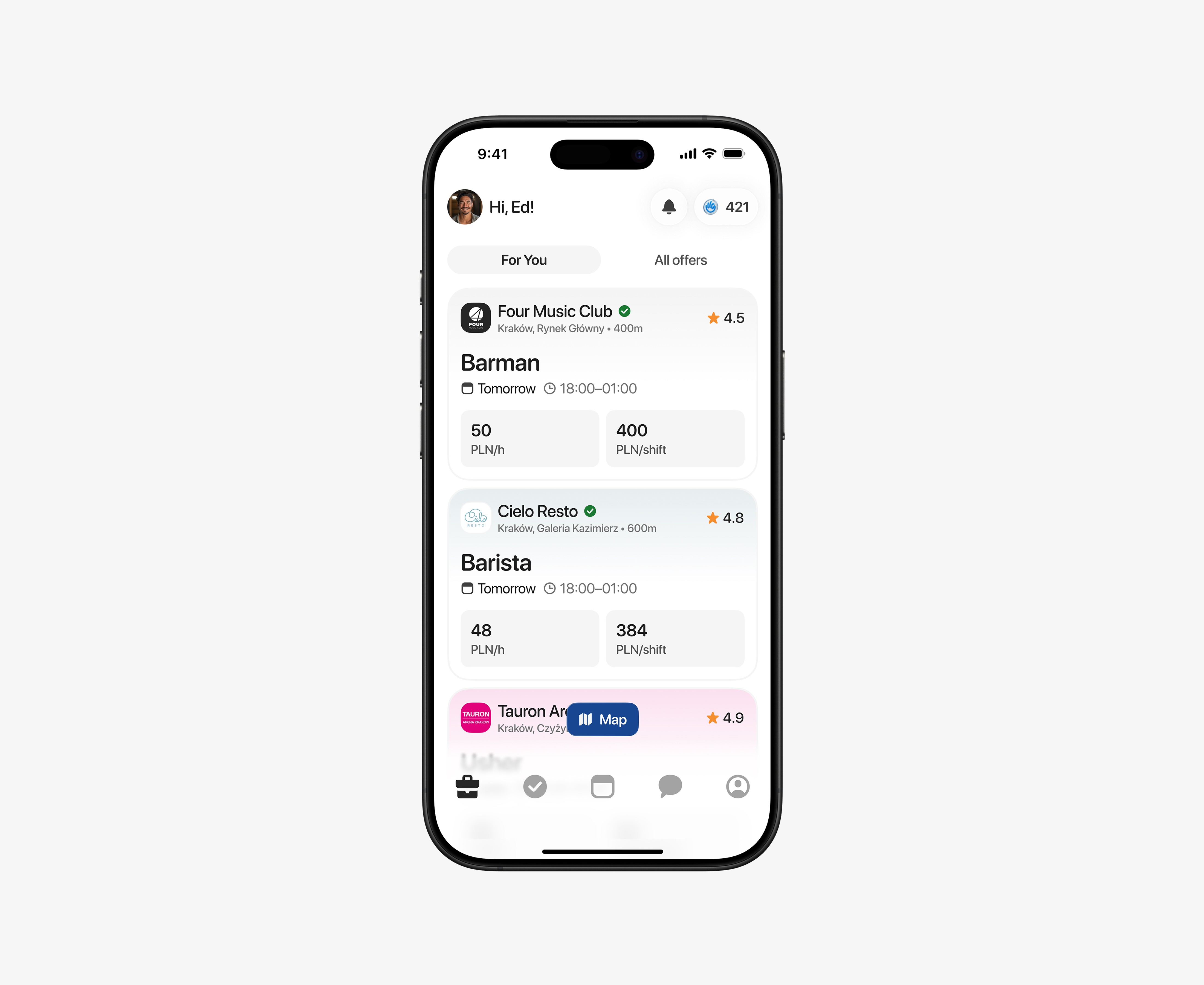
Sidezy is a mobile platform that connects local businesses with students and migrants for short-term, shift-based work. The product focuses on fast hiring, low-friction onboarding, and clear coordination on the day of work.
I worked on Sidezy as a product designer, responsible for discovery, UX architecture, user flows, UI design, and MVP scope definition. The project started from a real market problem and was developed with a strong MVP mindset, prioritizing speed, clarity, and real-world usability over feature completeness.
The problem
Short-term hiring in Poland is messy and inefficient.
Most employers rely on Facebook groups, Telegram chats, or personal contacts to find people for single shifts or short gigs. Workers scroll through chaotic feeds, send private messages, and often never get a response. Employers waste time repeating the same information, dealing with no-shows, and manually confirming who is actually coming.
There is no clear system of:
trust
availability
confirmation
accountability on the day of work
Existing job platforms are built for long-term employment and are too slow and heavy for urgent, local shifts. The result is stress on both sides and a lot of manual coordination that should not exist.
Goals and constraints
Business goals
Launch quickly in a single city (Kraków)
Validate real demand before scaling
Keep legal responsibility on the employer side
Build a clear path to monetization
User goals
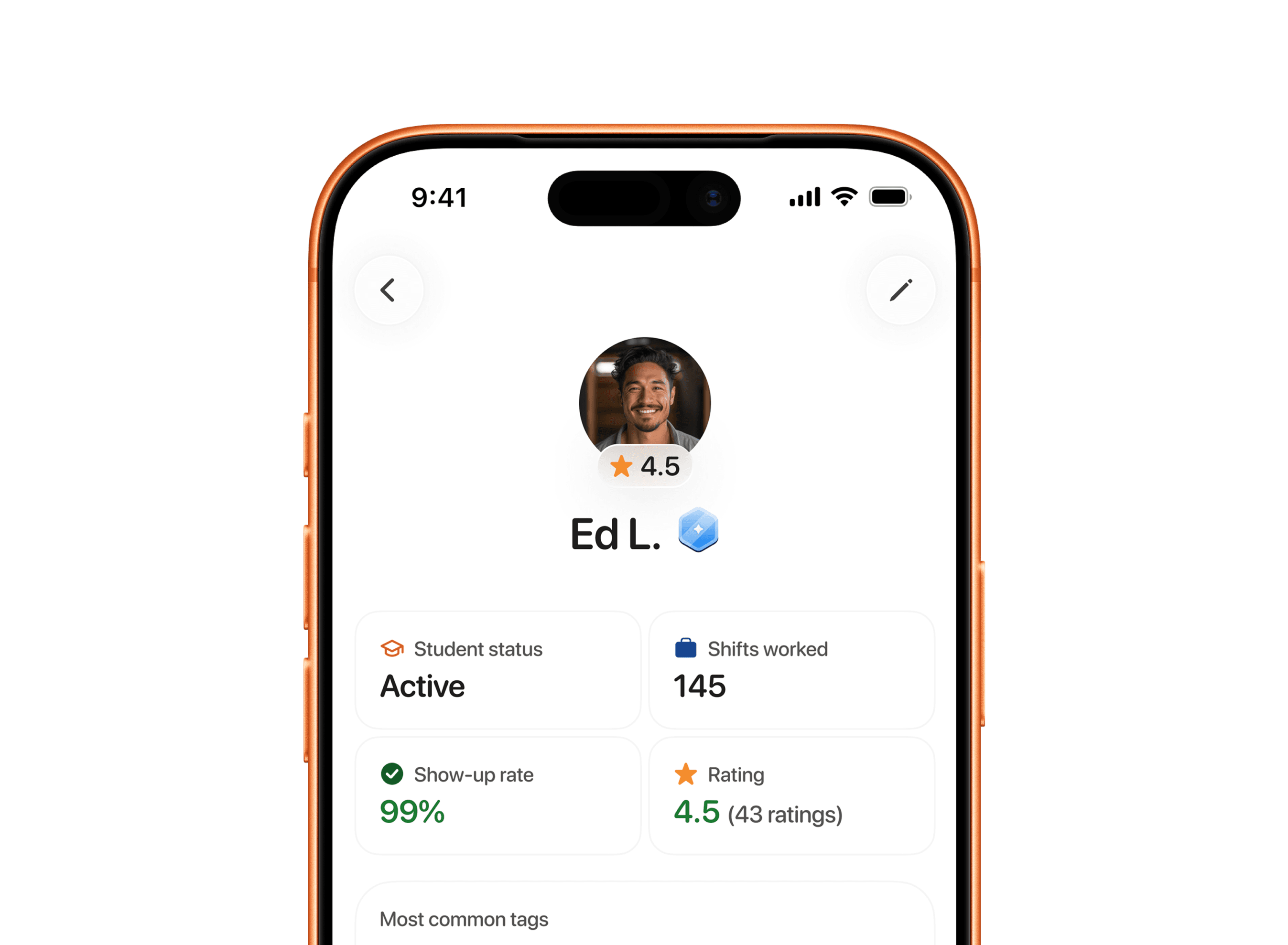
Workers want quick access to nearby jobs, clear pay, and certainty
Employers want speed, reliability, and control over who shows up
Constraints
Small team
MVP scope
Mobile-first usage
No legal automation or employment handling inside the platform
These constraints strongly influenced product decisions and tradeoffs.
Users and roles
Sidezy serves two very different user groups with different motivations and expectations.
Workers
Students and migrants looking for quick, short-term income. Their priorities are:
clear pay
location and timing
fast application
confidence that the job is real
Employers
Restaurants, clubs, hotels, and event organizers. Their priorities are:
reliability
fast hiring
clarity around attendance
minimal admin work
A core challenge was designing one product that serves both roles without confusing either of them.
Key product decisions
Role-first onboarding
From the first interaction, users choose whether they are looking for a job or hiring. This decision defines the entire experience and prevents mental model conflicts later. Trying to serve both roles in a single generic flow would have caused constant confusion.
Status-driven job lifecycle
Each job moves through clear states such as open, applied, accepted, checked-in, and completed. This reduces ambiguity and prevents the common “are you still coming?” problem that dominates short-term hiring.
QR code check-in
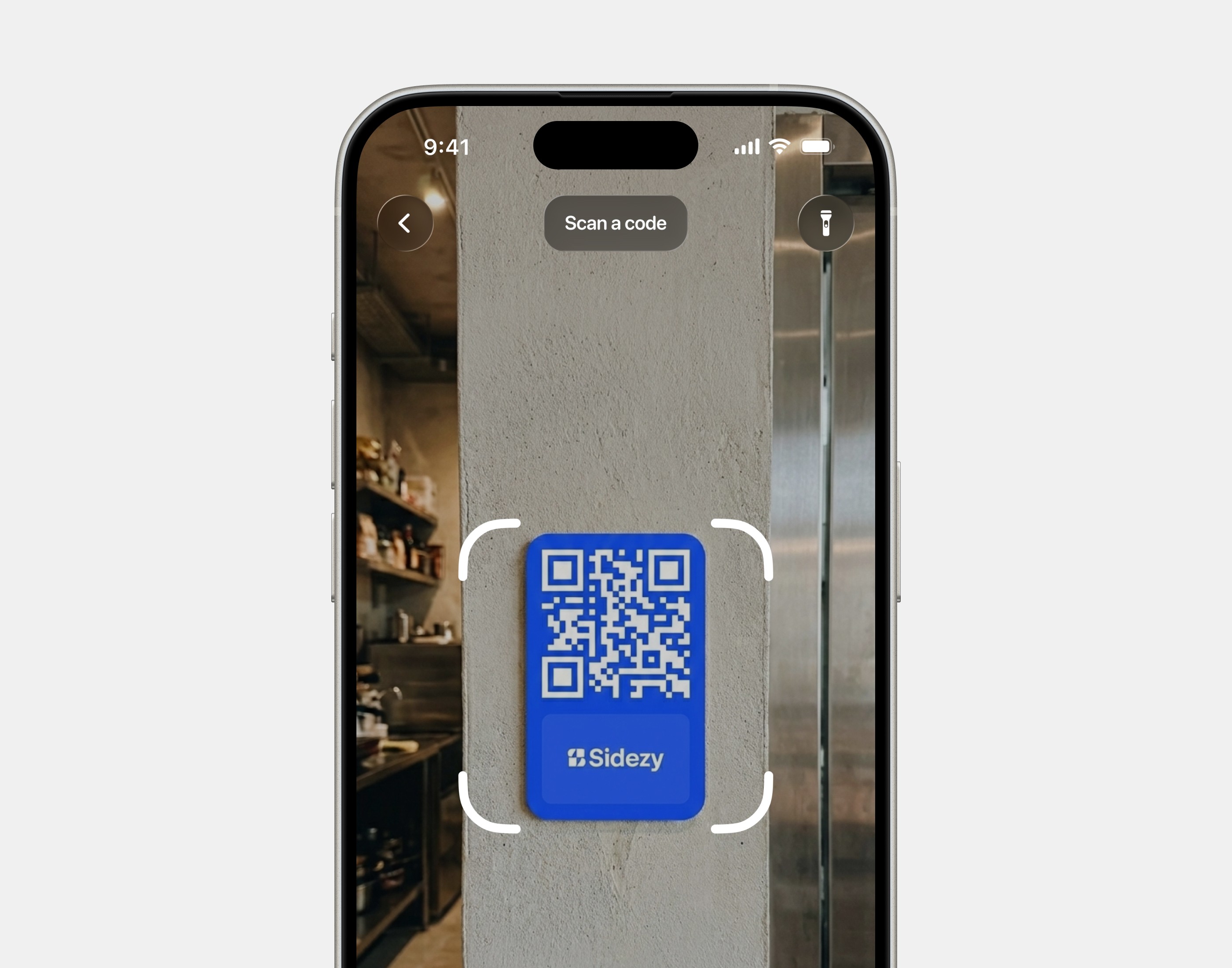
To reduce no-shows and confirm real attendance, workers check in on location using a QR code provided by the employer. This creates a simple confirmation moment without introducing complex verification systems.
Platform as coordinator, not employer
Sidezy does not handle contracts or legal employment. The platform focuses on listing, matching, and coordination, while legal responsibility stays with employers. This decision significantly reduced complexity and allowed the MVP to launch faster.
Information architecture and core flows
The product was structured around three essential flows.
Worker flow
Workers browse available jobs, filter by location and timing, view clear job details, and apply in a few taps. Salary and location are always visible, as these are the primary decision factors.
Employer flow
Employers create job listings with minimal required information, using sensible defaults to reduce friction. Posting a job is designed to be repeatable and fast, especially for businesses that hire regularly.
Day-of-work flow
On the day of the shift, job status updates automatically. Workers check in via QR code, and employers can immediately see who has arrived. This flow replaces manual messaging and last-minute chaos.
UX principles
Several principles guided design decisions throughout the project:
Reduce decision time
Make status always visible
Prefer defaults over configuration
Design for use under time pressure
Optimize for mobile, real-world conditions
These principles helped keep the product focused and consistent.
Monetization and business thinking
Sidezy uses a simple model:
Free for workers
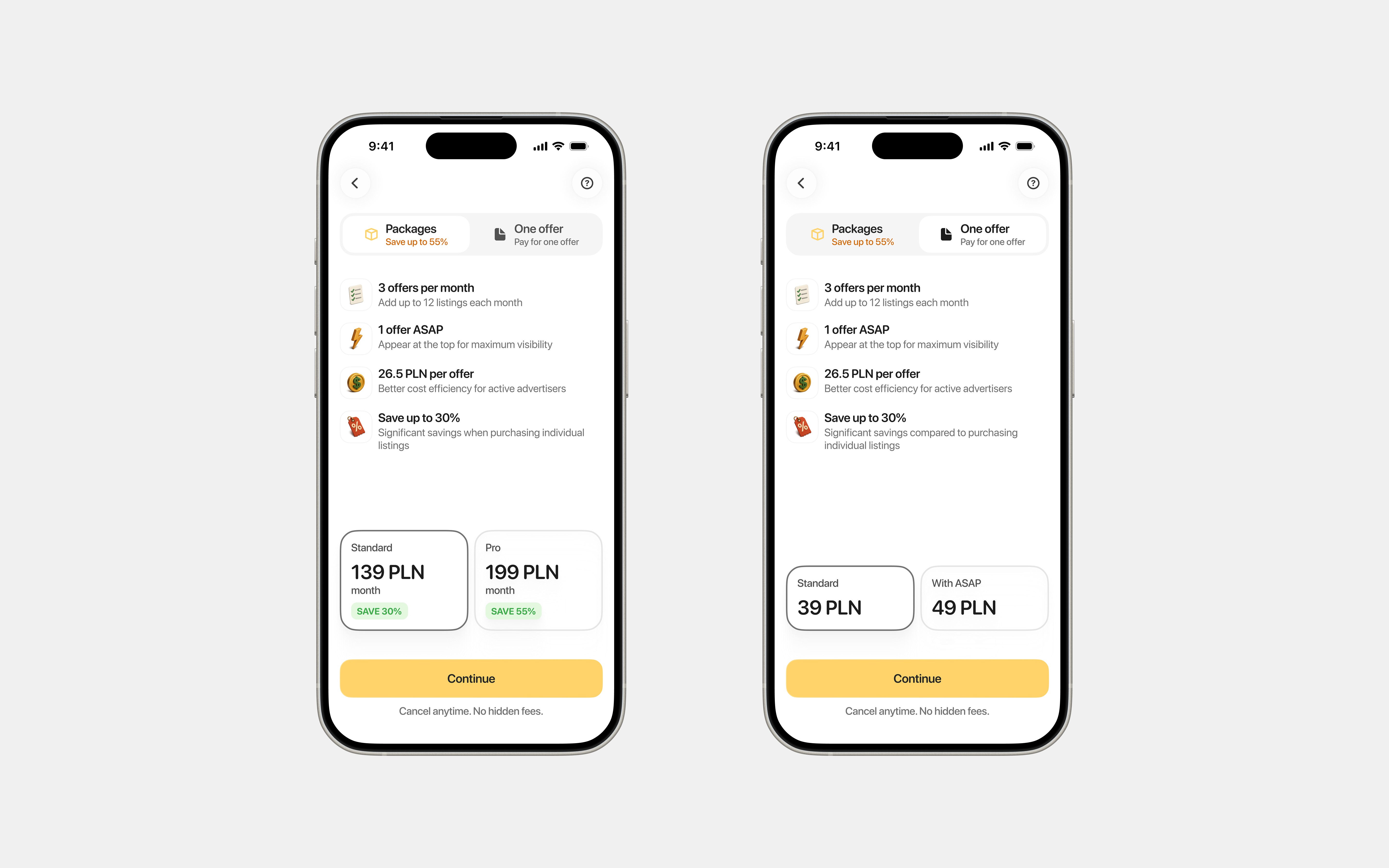
Subscription-based for employers
Employers pay for access to job postings and management tools, with plans designed around business size and hiring frequency. This aligns incentives and keeps the worker side accessible.
Tradeoffs and limitations
To ship the MVP, several features were intentionally excluded:
Advanced matching algorithms
In-app contracts or payments
These were conscious tradeoffs to prioritize speed, clarity, and validation over complexity.
Outcomes
The project resulted in a functional MVP designed for launch in Kraków. Early feedback confirmed that the biggest value came from clarity, speed, and reduced coordination effort rather than advanced features.
Learnings
This project reinforced several key lessons:
Designing for two-sided platforms requires strict role separation
Clear status systems can replace a lot of human communication
Speed and focus matter more than feature completeness in early stages
Legal and business constraints are part of UX, not separate from it